
Best smart plugs for older homes with no neutral wire
A smart plug does not need a neutral wire in the wall switch box; it takes power from the receptacle. For an older home, choose a listed plug that physically matches a safe outlet. TP-Link Kasa EP25 suits properly grounded outlets, while a Philips Hue Smart Plug is a sensible lamp focused choice.
By Olami Y.
Last updated September 07, 2026
🔍 Researched & cross-checked — the switch alternative below is hands-on tested, the plugs above are not
Why does no neutral usually not matter?
Because a smart plug connects at the receptacle, the missing neutral in an old switch box is usually irrelevant. Neutral carries current back to the electrical panel, but a plug-in device reaches it through the outlet contacts.
The real question is whether the receptacle is safe, correctly wired, and suitable for the appliance. Many older homes have two slot ungrounded outlets. A grounded smart plug with three prongs will not fit, and removing the ground pin or using a three to two adapter does not create a ground.
Safety note: The US Consumer Product Safety Commission warns that adapters must be grounded and that a qualified electrician should check the receptacle. If an outlet is loose, warm, scorched, buzzing, cracked, or intermittently dead, stop using it and call a licensed electrician.

Which smart plugs are the best fit?
Choose by outlet type and ecosystem first. These picks are based on current manufacturer information, not based on specific Domoviq testing for this article.
TP-Link Kasa EP25: best choice for energy tracking
Its maker, TP-Link, currently lists energy monitoring, schedules, away mode, and control through its Kasa app. It uses a grounded three prong connection, so choose it only for a properly grounded receptacle; verify current platform support before ordering.
Tapo P125M: best compact Matter option
Its maker, TP-Link, currently lists the P125M for Matter control and names major Matter platforms on its product page. Matter can simplify mixed ecosystems, but every controller and app must meet the current requirements. This plug also needs a grounded outlet.
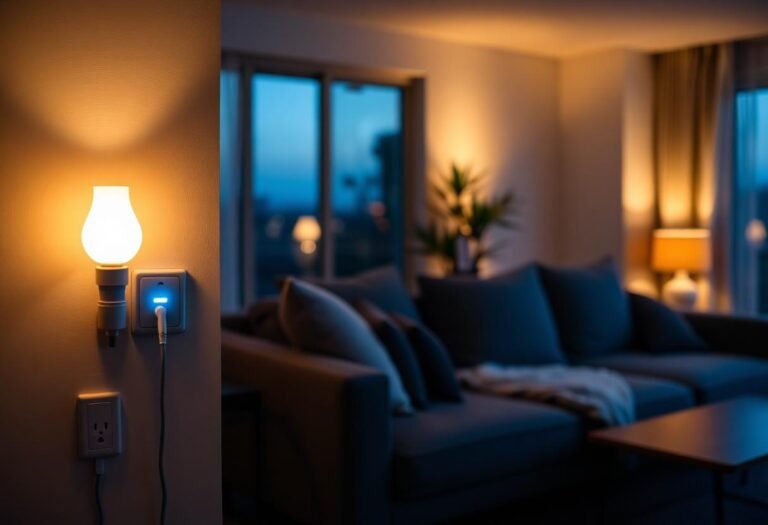
Philips Hue Smart Plug: best for lamps
Signify currently describes this as a way to add conventional lamps to the Hue system, with Bluetooth control or expanded features through a Hue Bridge. Treat it as an on and off lamp accessory, not a dimmer, and confirm plug shape on the US listing.
Lutron Caséta Plug-In Lamp Dimmer: best choice for dimming
Lutron currently positions this plug in module for dimmable lamps and Caséta control. Choose it when reliable lamp dimming matters more than appliance control. Check Lutron’s load compatibility tool first; never connect a motor, heater, or other unsupported load to a lamp dimmer.
Check current prices: TP-Link Kasa EP25 · Tapo P125M · Philips Hue Smart Plug · Lutron Caséta Plug-In Lamp Dimmer

How should you check compatibility?
Start with the outlet, then match the plug’s electrical rating, radio, and app to your needs.
- Turn off and unplug anything connected to the receptacle. Do not remove the wall plate or open wiring just to shop for a plug; that inspection belongs to a licensed electrician.
- Count the slots without forcing an adapter. Two slots usually indicate an ungrounded receptacle; two slots plus a round or U shaped opening provide a ground contact, though an electrician must verify that it is actually grounded.
- Read the appliance nameplate and the smart plug label. The plug’s voltage and current ratings must cover the connected load, and the manufacturer must permit that appliance type. Space heaters and air conditioners deserve direct manufacturer guidance.
- Check Wi Fi coverage where the plug will live. Wi Fi models often use 2.4 GHz Wi Fi; hub based choices use stated radio. Our guide to smart home hub compatibility can help you sort controllers from radios.
- Measure clearance around the outlet and nearby furniture. A compact body should leave the second socket usable, but product dimensions and outlet orientation decide that. Check the manufacturer’s current drawing rather than relying on marketing photos.
Renters should ask the owner before any receptacle replacement. Our reversible DIY picks for renters favor devices that unplug cleanly, while our Smart Home Lab energy monitoring coverage explains what plug level readings can and cannot tell you.
What mistakes cause trouble?
The costliest mistakes involve unsafe adapters, excessive loads, or the wrong control type.
- Do not defeat a ground pin to fit a two slot outlet. Ask an electrician whether a code compliant replacement, such as a GFCI protected receptacle with required labeling, is appropriate for that circuit and local rules.
- Do not place one smart plug behind another, on a damaged extension cord, or where its instructions prohibit use. Plug it directly into a sound receptacle unless the manufacturer explicitly allows another arrangement.
- Do not assume every plug dims a lamp. Standard smart plugs switch power only. Use a listed lamp dimmer for a compatible dimmable bulb, and leave smart bulbs continuously powered so their radios remain reachable.
- Do not overlook recovery after an outage. Check whether the app offers an on, off, or previous state setting, then choose the safest behavior for the connected device.
How do you set one up safely?
Setup is simple once the outlet, load, and network checks are complete.
- Install the maker’s current app, create the required account if any, and update your phone before plugging in the device. Review privacy permissions rather than accepting every optional request.
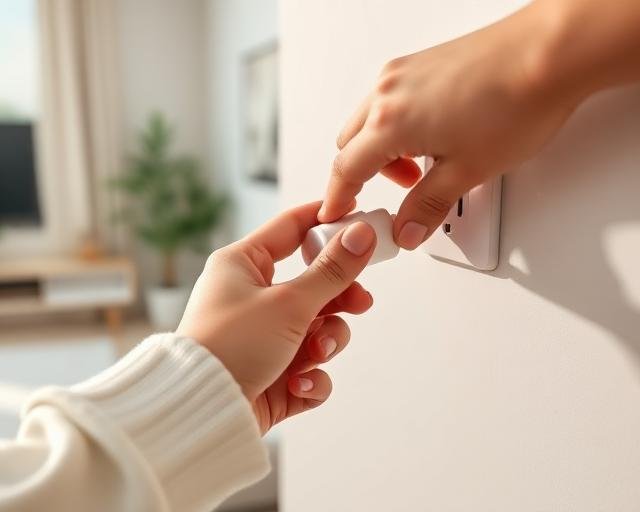
- Plug the smart plug directly into the checked outlet, then watch for its status light. If it does not start, try the reset sequence in the current manual instead of repeatedly cycling power.
- Add it to the app or hub and give it a plain room based name, such as Living Room Lamp. Test local button control first, then app control, schedules, and voice control separately.
- Connect the intended appliance while it is switched off. Turn it on from the plug, stay nearby for the first cycle, and disconnect it immediately if the outlet or plug becomes hot, smells odd, or crackles.
Remember: A smart plug cannot repair old wiring. Repeated breaker trips, flickering elsewhere on the circuit, or heat at the receptacle require a licensed electrician, even if the plug appears to work.
Which plug should you choose?
Choose Kasa EP25 if you have a verified grounded outlet and want energy data. Choose Tapo P125M if Matter is your priority. Choose Philips Hue for a conventional lamp already tied to Hue, or Lutron Caséta when compatible lamp dimming is the job. If you have only two slots, spend nothing on a plug until an electrician evaluates the receptacle. Check current listings before purchase, since app and platform support can change.
What if a plug isn’t the right fix — no-neutral switches we’ve actually tested
✓ Hands-on tested — see how we test
A plug only helps if the device you want to automate can sit in an outlet. If it’s an overhead light controlled by a wall switch with no neutral wire, the plug in this guide won’t help — you need a switch built for that wiring instead. We’ve personally installed and tested two: the ELEGRP Single Pole Occupancy Motion Sensor Switch, built specifically for no-neutral-wire boxes with a grounding wire, and the Lutron Motion Sensor Light Switch (MS-OPS2-WH), a reliable auto-on/auto-off switch for bathrooms, garages, and laundry rooms. Neither is “smart” in the app-connected sense — both are motion-activated, not remotely controlled — but both solved the no-neutral problem at the switch itself rather than working around it with a plug.
Check current prices: ELEGRP No-Neutral Motion Sensor Switch · Lutron Motion Sensor Light Switch (MS-OPS2-WH)
For the full switch-vs-battery-fixture breakdown and how to check your switch box, see our dedicated renter-safe motion-sensor lighting guide.