Renter-Safe Blackout Solutions That Don’t Require Curtain Rods
The most renter-safe blackout options are removable fabric panels, static-cling window film, suction-cup shades, and tension-fit blinds installed inside the window recess. Choose cordless products if children are present; the Window Covering Safety Council recommends cordless coverings for homes with young children. Always confirm adhesive and glass compatibility first.
By Olami Y.
Last updated November 02, 2026
Which rod-free blackout method works best?
Removable fabric panels are the most flexible choice, while tension-fit shades usually look the most like permanent window treatments.
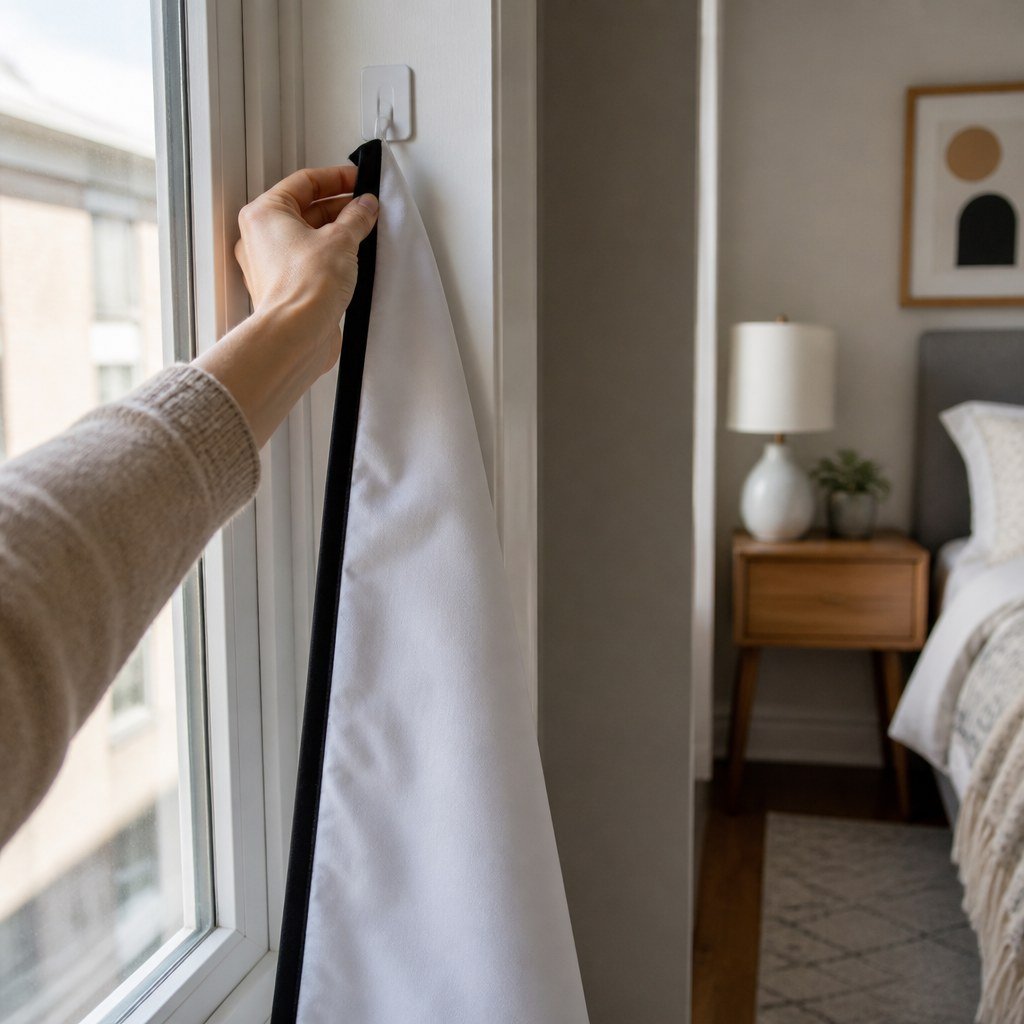
Removable fabric panels
Attach blackout fabric around the frame with removable hook-and-loop strips. This blocks edge light well, but the adhesive must suit the painted or finished surface.
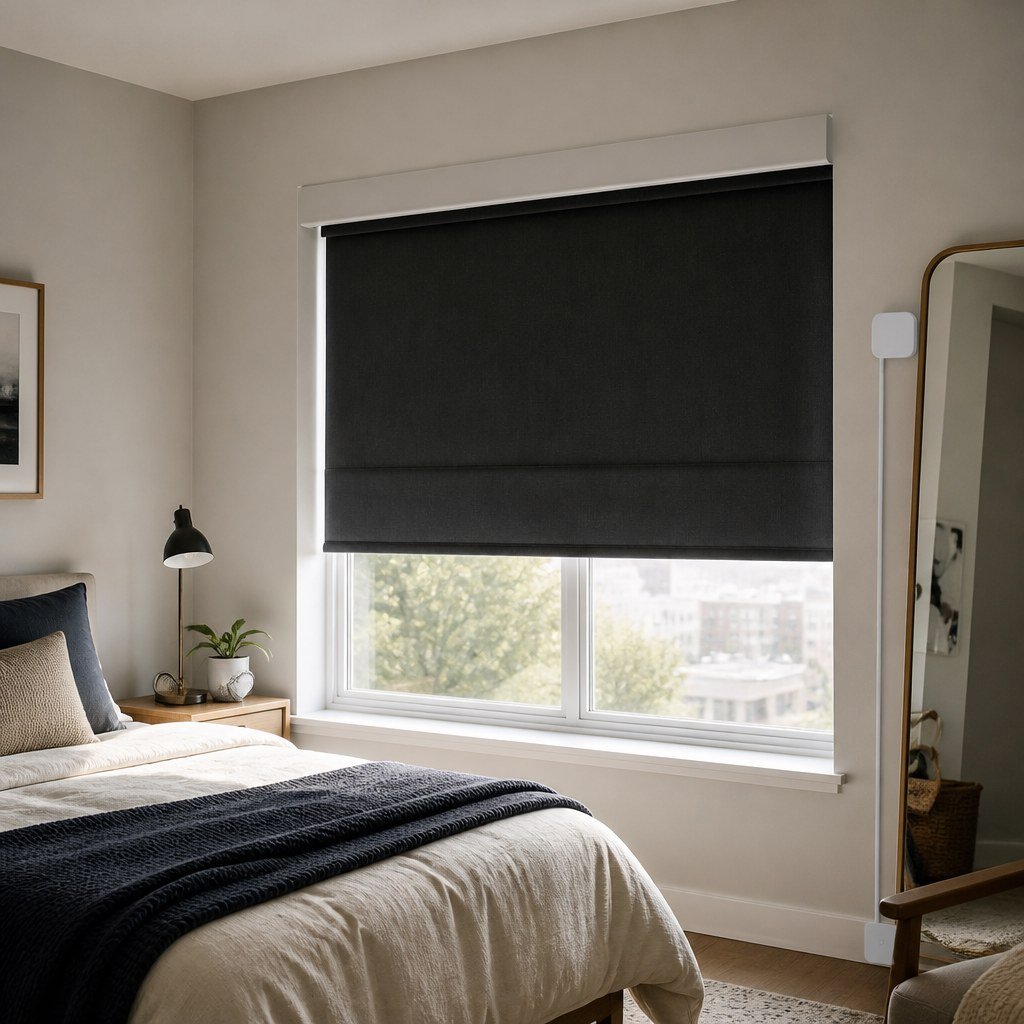
Tension-fit shades
A spring-loaded or compression-mounted shade sits inside a suitable recess. It avoids adhesive, although shallow or uneven frames may not provide a secure fit.
Static-cling blackout film
Non-adhesive film clings to clean glass and stores flat after removal. Check the film maker’s guidance for insulated, coated, cracked, or textured glass.
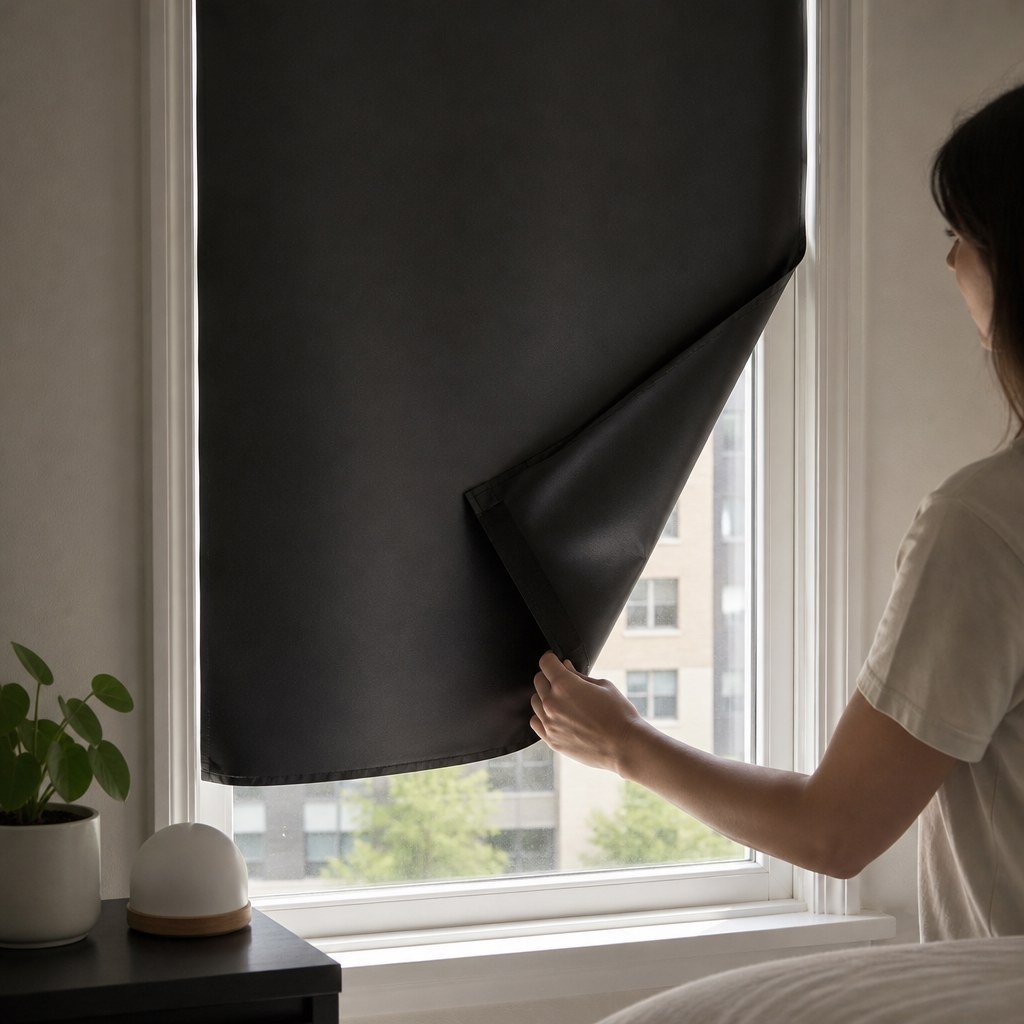
Suction-cup shades
These portable panels work best on smooth glass. They are useful for short leases and travel, though cups can release if the glass is dusty or textured.
Choose fabric when darkness matters more than daytime convenience. Choose a tension-fit shade if you open the window covering daily. Choose static cling for privacy and broad glass coverage without touching the wall. Our reversible DIY picks for renters cover the same remove-without-repair decision.
How should you compare the options?
Start with the window surface, recess depth, and amount of edge light you can tolerate.
Use the Domoviq tools hub to plan this upgrade alongside other deposit-safe changes.
How do you install a removable blackout panel?
A careful test patch matters more than rushing to cover the window.
- Measure the full area you want covered, including the light-leaking edges outside the glass.
- Check your lease for restrictions on adhesives, window films, trim, or visible exterior-facing materials.
- Test one removable strip in an inconspicuous spot for the manufacturer’s stated test period. Do not use it if paint lifts, softens, or changes sheen.
- Clean the approved mounting surface according to the strip maker’s directions, then let it dry completely.
- Cut the blackout fabric with enough overlap to cover gaps at the top, sides, and sill.
- Apply the fasteners without stretching their adhesive tabs. Press them for the stated time and observe any waiting period in the instructions.
- Attach the panel, turn off the room lights, and inspect the edges during daylight. Add overlap before adding more adhesive.
💡 Place removable fasteners on sound trim only if their instructions approve that finish. Fresh paint, wallpaper, flaky paint, and unsealed wood are poor candidates.
For metal frames, magnets may eliminate adhesive, but verify that the frame actually attracts a magnet and that the window still closes and locks. Our damage-free wall mounting guidance and window-covering ideas in Reversible DIY can help you assess delicate finishes.
What mistakes can cost your deposit?
Damage usually comes from an unsuitable surface, excess adhesive, or hurried removal.
- Do not substitute permanent mounting tape because a removable strip releases. Use a larger fabric overlap or switch to a tension-fit option.
- Do not attach fasteners to loose paint, wallpaper, veneer, or unknown finishes without written product approval and a successful test patch.
- Do not block window locks, emergency egress, ventilation openings, heaters, or air-conditioning equipment.
- Do not apply dark film until its manufacturer confirms compatibility with your glass type. Heat absorption can differ by film and glazing construction.
- Do not pull adhesive strips outward from the wall. Follow the removal direction shown by the manufacturer, usually slow and parallel to the surface.
Take dated photos before installation and after removal. Keep the packaging and instructions until move-out. This record will not override your lease, but it documents the product used and the condition you left behind.
Can you get a truly dark room without drilling?
Yes, but you must control light at the edges rather than relying only on “blackout” material.
A panel mounted directly over the opening generally seals gaps better than a shade sitting within it. If light still appears, overlap the frame farther, place a removable draft-style blocker along the sill, or combine static-cling film with a fabric panel. Avoid taping loose foil, cardboard, or fabric against hot fixtures.
Will removable strips always protect paint?
No. Results depend on paint condition, curing time, surface texture, preparation, product limits, and removal technique. Written landlord permission is the safest route when the finish is fragile or recently painted.
Can blackout film be removed and reused?
Some non-adhesive static-cling films can be removed and stored, but reuse depends on the current manufacturer’s instructions and the film’s condition. Keep the backing sheet if one is supplied.
What should you use on a window with no recess?
Choose a fabric panel attached around the opening, a suction-cup panel on smooth glass, or a freestanding folding screen where space allows. Start tonight by measuring the glass and outer frame, then test your least-visible mounting spot before buying material for every window.