
How to test if your rental’s paint will survive removable hooks
Test the paint in a hidden spot before installing any removable hook. Clean the area, apply one small strip exactly as its maker directs, wait the stated bonding time, then remove it slowly. 3M says Command strips should be pulled straight down, not outward. Stop if paint lifts, cracks, or feels loose.
By Olami Y.
Last updated September 11, 2026
What makes removable hooks damage paint?
Paint usually fails because its bond to the wall is weaker than the adhesive, or because removal puts outward force on the coating. A hook labeled removable cannot guarantee a damage-free result on every rental wall.
Fresh paint may still be curing even when it feels dry. Flat or chalky finishes can have weak surfaces, while poor preparation, moisture, old layers, and patched areas can reduce adhesion. Wallpaper, textured coatings, and delicate finishes need extra caution. Your lease and the hook maker’s surface exclusions matter more than the load printed on the package.
What do you need for a safe test?
You need a spare adhesive strip, a clean cloth, rubbing alcohol if the manufacturer permits it, a timer, and good light. Use the exact strip model planned for the final hook.
Check the current package instructions first. Different removable adhesives specify different surfaces, cleaning methods, temperatures, weight limits, bonding times, and removal motions. If the directions conflict with general advice here, follow the manufacturer. Do not substitute household cleaner unless allowed; some leave residue that weakens the bond.
- One unused strip from the same package.
- A clean, lint-free cloth and permitted cleaner.
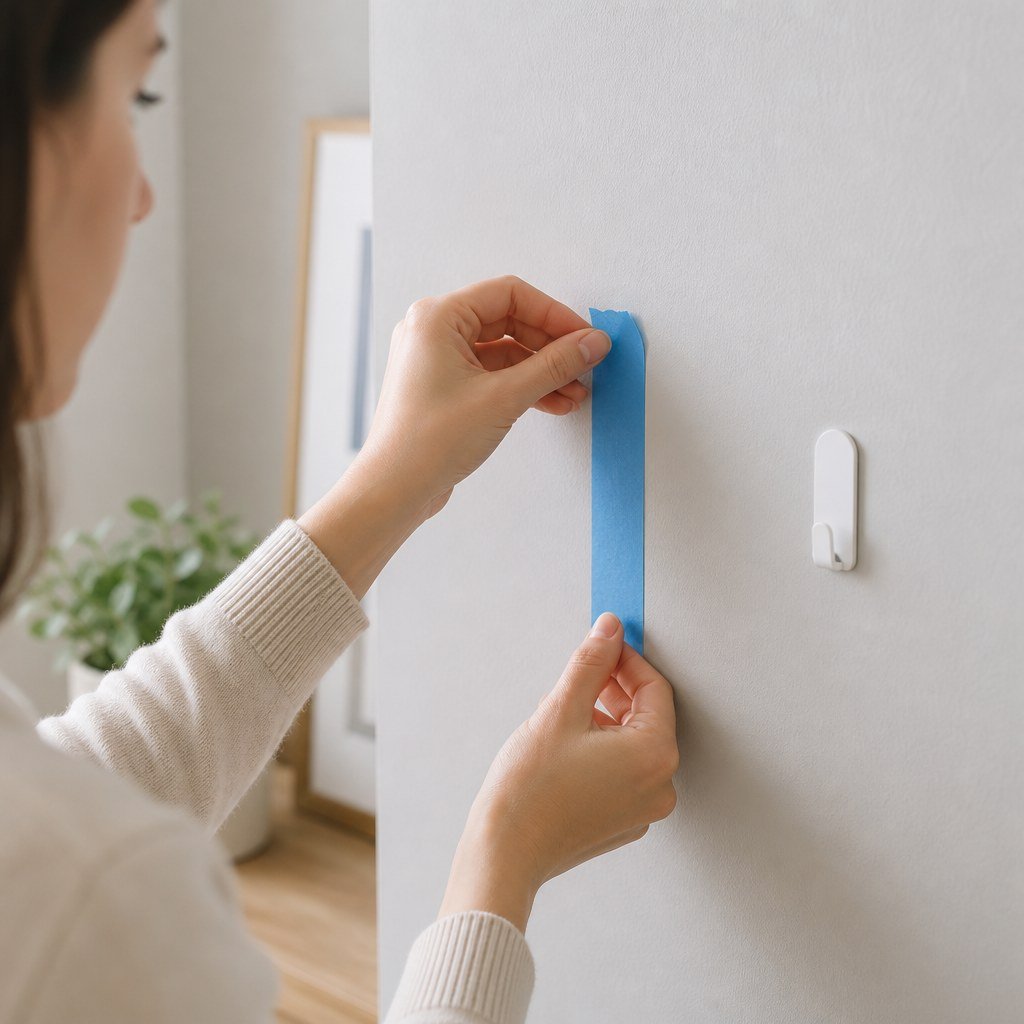
- Painter’s tape and a pencil to mark the test spot.
- A phone camera to document the wall before and after.
Check current prices: 3M Command strips variety pack
Pick a spot behind a door, near the baseboard, or where furniture will hide a small flaw. The test must share the same wall, finish, and apparent paint condition as the intended location. Testing inside a closet proves little if the room was repainted separately.
How do you run a patch test?
Run the test exactly like an installation, but use the adhesive strip without the hook whenever possible.
- Inspect the chosen spot under angled light. Photograph chips, bubbles, hairline cracks, powdery residue, or mismatched touch-up paint before cleaning. Press clean fingertips nearby; if the coating flakes or transfers as dust, do not apply adhesive.
- Read the strip instructions from start to finish. Confirm that painted drywall is listed and that the paint is older than any minimum cure period stated by the maker. If you cannot confirm when the wall was painted, ask the landlord or wait.
- Clean only as directed, using gentle pressure. Let the spot dry fully. Do not sand, scrape, or “improve” rental paint; that creates damage before the test begins.
- Apply the small strip with the correct side facing the wall. Press for the stated duration, then leave it unloaded for the full bonding time listed on the package.
- After the wait, look around the edges in bright, sideways light. Stop if paint wrinkles, darkens, blisters, or separates. Never add a load to a surface already reacting.
- Remove the strip by holding the top lightly and stretching the release tab slowly in the direction shown. For Command strips, 3M instructs users to pull the tab straight down along the wall, not toward themselves. Keep your hand clear of the strip’s path.

How do you judge the result?
A passing test leaves the wall unchanged in color, sheen, texture, and firmness after the strip is fully removed.
Compare your before photo under the same lighting. Gently wipe the spot with a dry white cloth. Paint transfer, a tacky patch, a raised edge, or a visible sheen change counts as failure. A faint adhesive shadow may be residue, but use only a removal method approved by the manufacturer and landlord.
One clean pass lowers risk; it does not promise the rest of the wall will behave identically. Repeat in a second hidden spot near the planned placement, especially on patched or uneven walls. This cautious standard also fits our reversible DIY picks for renters and renter-safe wall display ideas.
What should you do after a failed test?
After a failed test, stop using that adhesive on the painted surface and save your photos.
Do not keep testing stronger strips. More adhesive cannot repair weak paint. If a tiny chip appeared, photograph it beside a coin or ruler, notify the landlord if your lease requires it, and ask before touching up the finish. Matching color alone may still leave a different sheen.
Choose another mounting method
Choose a tension rod, over-the-door hook, freestanding rail, shelf, or furniture-mounted organizer if adhesive changes the test spot. Choose a small landlord-approved nail or picture hanger only if your lease allows holes and the repair terms are clear. For cables and sensors, our reversible cable management ideas and Smart Home Lab sensor placement guidance can help avoid painted zones.
Ask the property manager before attaching anything to wallpaper, murals, limewash, Venetian plaster, damp walls, or surfaces with active peeling. These finishes can be difficult to patch invisibly. If damage is broad or moisture appears involved, leave diagnosis and repair to the landlord or their qualified painter.
Can you install the hook after a pass?
A second clean pass means you can proceed cautiously, provided the lease and product directions allow the surface.
Use a fresh strip, repeat the same cleaning and bonding steps, and stay below the package’s stated load limit. Place valuable or breakable items somewhere else. Before move-out, photograph the hook, reread removal directions, and pull slowly rather than yanking outward.
Make your next wall test count
Start with one hidden spot today, document it, and let the paint—not the product label—make the decision before you commit to every planned hook.