Renter-Safe Smart AC Control Without Touching HVAC Wiring (2026)
A renter can’t legally or safely rewire a hardwired thermostat, but a plug-in or clip-on smart AC controller solves the same problem — remote and scheduled climate control — without touching a single wire. These controllers sit on top of a window unit or work like a universal remote for central air, learning your existing remote’s signals instead of replacing your building’s thermostat.
Here’s how the renter-safe path differs from a real smart thermostat, and what to check before buying.
Why can’t renters just install a smart thermostat?
Because a smart thermostat replaces the wall unit wired into your building’s HVAC system — equipment you don’t own and, in most leases, aren’t permitted to modify. Most smart thermostats also need a C-wire (a dedicated low-voltage wire for continuous power) that many older HVAC setups don’t have run to the thermostat location, which means even a willing landlord might be looking at an electrician visit, not a simple swap.
The renter-safe alternative works around this entirely by controlling the existing system remotely instead of replacing its thermostat.
What’s the difference between a smart AC controller and a smart thermostat?
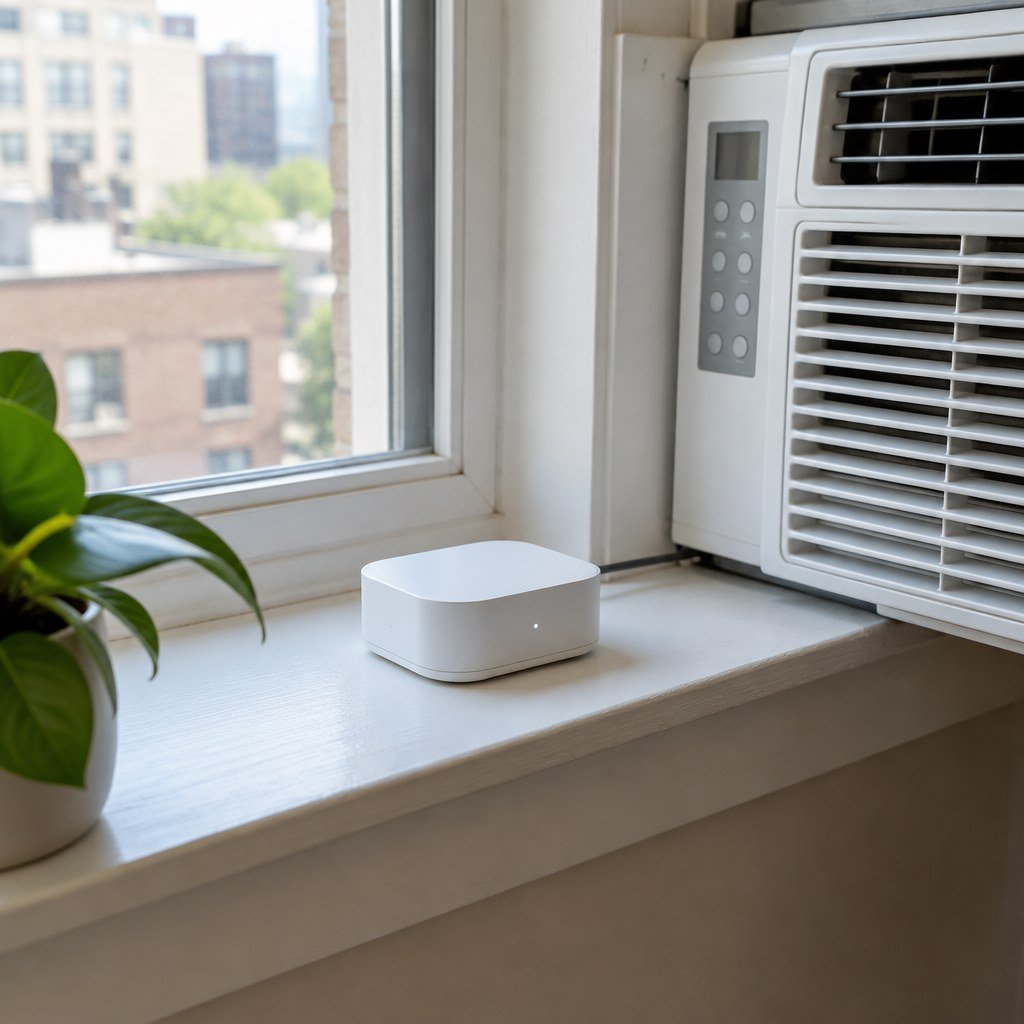
A smart AC controller mimics your existing remote control; it doesn’t wire into anything. For a window or portable AC unit, this is a small plug-in device that sits near the unit and sends the same infrared signals your physical remote does, just from an app or a schedule instead of your hand. For central air with a wall thermostat that already uses a remote or simple on/off wiring at the unit itself (uncommon but it exists), a similar retrofit approach can apply — but most central-air renters are better served by asking their landlord about a thermostat upgrade directly, since central systems usually don’t have a remote-control layer to intercept.
What should you actually buy?
Look specifically for a controller marketed as working with your AC or heat pump’s existing remote, with app-based scheduling and, ideally, a geofencing or “away” mode so it powers down automatically when you leave. Devices in the Sensibo and Cielo product lines are built specifically for this use case — they clip near or on the unit, learn your remote’s exact signal, and add scheduling and remote control without any wiring at all.
Check current prices: Sensibo Sky · Cielo Breez
How do you set one up?
- Place it within line of sight of the AC unit’s receiver — most controllers need a clear infrared path, the same requirement as your existing physical remote.
- Run the setup wizard, which usually auto-detects your AC brand from a built-in signal library, or walks you through teaching it your remote’s exact codes if your model isn’t already listed.
- Set a schedule or geofencing rule once basic on/off and temperature control are confirmed working — this is where the actual energy savings come from, not the remote-control convenience alone.
- Keep the original remote. The controller supplements it, and you’ll want the physical remote as a backup if the app or Wi-Fi is ever unavailable.
Does this work for central air too?
Rarely in the way renters hope. Most central air systems are controlled by a hardwired wall thermostat with no remote-control layer to intercept, which means a plug-in controller has nothing to talk to. If you have central air and no remote, the honest answer is: ask your landlord about a thermostat upgrade, or accept manual control of the existing unit for the length of your lease.
Frequently asked questions
Will a smart AC controller void my renter’s insurance or lease?
Generally no, since it doesn’t modify the AC unit or any building wiring — it’s an external accessory, similar to adding a smart plug. Check your specific lease language if you’re unsure, but this category doesn’t typically trigger “alteration” clauses the way a hardwired thermostat swap would.
Do these controllers work with every window AC unit?
Most modern window and portable units that come with an infrared remote are compatible, since the controller is learning that remote’s signal rather than needing a specific brand partnership. Units with no remote at all — knob-only controls — can’t be controlled this way.
How much energy do these actually save?
Savings come mainly from scheduling and geofencing — turning the unit off automatically when nobody’s home rather than running it all day. The device itself doesn’t make the AC more efficient; it makes it easier to stop running when you don’t need it.
Can I take it with me when I move?
Yes. It’s a standalone accessory near the AC unit, not attached to it — unplug it, take it to your next place, and re-pair it with whatever unit is there.
Last checked: September 2026.
Next: see our renter-specific worth-it breakdown for the bigger cost-benefit picture, or check the Kit Builder to plan a full renter-safe setup.