SmartThings vs Home Assistant: Which Is Right for You?
SmartThings is the better pick if you want a phone app and a few sensors working together within a week, and Home Assistant is the better pick if you want full local control and don’t mind spending a weekend on setup. Both can run the same physical devices — locks, lights, sensors, thermostats — but they sit at opposite ends of the “just works” versus “works exactly how I want” spectrum.
Here’s how the two actually compare on cost, setup time, device support, and what happens when your internet goes down.
What’s the real difference between SmartThings and Home Assistant?
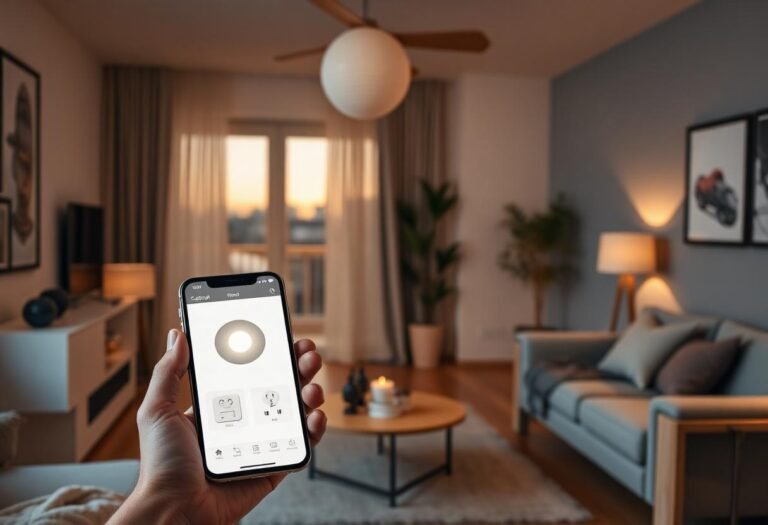
SmartThings is a consumer app backed by Samsung’s cloud, while Home Assistant is open-source automation software you run yourself. SmartThings ships as an app plus an optional hub, with most of the setup handled for you through guided pairing screens. Home Assistant is free software that you install on a small computer (a Raspberry Pi, a NUC, or purpose-built hardware like Home Assistant Green) and configure through a web dashboard, with almost unlimited depth once you’re past the basics.
The practical split: SmartThings optimizes for “open the app, add a device, done.” Home Assistant optimizes for “control everything, on your terms, even without internet.”
How much does each one cost to get running?
SmartThings costs nothing beyond the devices you buy, since the app is free and a hub isn’t required for many Wi-Fi devices. A SmartThings Station or compatible hub, if you want Zigbee/Z-Wave support, typically runs $30–$80. Home Assistant’s software is also free, but most people pair it with dedicated hardware — a Raspberry Pi setup runs around $80–$120, while Home Assistant Green or Yellow (official, ready-to-go boxes) run roughly $100–$150. Add a Zigbee or Z-Wave USB stick (around $20–$40) if you want non-Wi-Fi devices.
Neither platform charges a subscription for core functionality, which puts both ahead of ecosystems that gate automations behind a monthly fee.
How do SmartThings and Home Assistant compare side by side?
| Factor | SmartThings | Home Assistant |
|---|---|---|
| Setup time | 15–30 minutes for basic use | A few hours to a weekend for a full setup |
| Hosting | Samsung cloud (hub relays locally for some routines) | Runs entirely on your own hardware, locally |
| Cost to start | Free app; hub optional, ~$30–$80 | Free software; hardware typically $80–$150 |
| Device support | Wide, but curated — check compatibility first | Extremely wide via community integrations (thousands of devices) |
| Works without internet | Partially — some local automations, most cloud-dependent | Yes, almost everything runs locally |
| Learning curve | Low | Moderate to steep |
Which one supports more devices?
Home Assistant supports more devices in total, because its integration library is community-built and covers thousands of brands, including obscure or discontinued ones. SmartThings supports a large and growing list too, but it’s curated by Samsung and its partners, so a niche or older device is more likely to have a matching Home Assistant integration than a SmartThings one. If you already own a mixed bag of gear from different brands and years, Home Assistant is the safer bet for getting everything under one roof.
Which is easier to set up if you’re not technical?
SmartThings wins here without much argument. You download the app, sign in, and follow on-screen pairing steps for each device — no code, no YAML files, no command line. Home Assistant’s initial install (flashing an SD card or running an installer) and its configuration model both assume some comfort with tinkering. Plenty of guides and a large user forum help close that gap, but budget real time to learn it, especially for anything beyond the default dashboard.
Does either one keep working if your internet or the cloud goes down?
Home Assistant keeps working through an internet outage because it runs and processes automations locally; SmartThings depends more heavily on Samsung’s servers for many automations and remote access. SmartThings has added local execution for some routines on newer hub hardware, but voice control, remote app access, and some automations still route through the cloud. If “my lights should still work when the internet is out” matters to you, that’s a point in Home Assistant’s favor.
Which one should you actually choose?
Pick SmartThings if you want a handful of devices working reliably with minimal setup and you’re fine with an occasional cloud outage taking down a feature. Pick Home Assistant if you have (or plan to build) a larger, mixed-brand setup, you value local control and privacy, and you’re willing to spend a weekend learning the platform. Some households run both — SmartThings for a few simple routines, Home Assistant for the deeper automation — though that adds complexity most people don’t need to start with.
Frequently asked questions
Can SmartThings and Home Assistant work together?
Yes. Home Assistant has a SmartThings integration that lets you bring SmartThings-connected devices into Home Assistant’s dashboard and automations, so you can keep SmartThings for device pairing while using Home Assistant as the automation brain.
Do I need a separate hub for Home Assistant?
You need a device to run the Home Assistant software itself (a Raspberry Pi, a NUC, or an official box like Home Assistant Green), and separately a Zigbee or Z-Wave USB stick if you want non-Wi-Fi devices. Wi-Fi and Matter devices generally don’t need the extra stick.
Is Home Assistant safe from Samsung shutting anything down?
Home Assistant’s local features aren’t tied to any single company’s servers, so a corporate decision elsewhere can’t turn off your core automations. SmartThings, being tied to Samsung’s cloud, has more exposure if Samsung changes or discontinues features — something that’s happened to smart home platforms before.
Which one works better with Matter?
Both support Matter. Home Assistant added Matter support through its own controller, and SmartThings has supported Matter devices and can act as a Matter controller as well. Either one is a reasonable Matter hub in 2026; check your specific devices’ Matter certification either way.
Is Home Assistant worth it if I only have a few devices?
Probably not yet. Home Assistant’s advantages — deep customization, huge device support, full local control — pay off as your setup grows. For three or four devices, SmartThings (or your voice assistant’s native app) will get you running faster with less overhead.
Last updated: September 2026.
Next: if you’re still deciding on hub hardware, see our best smart home hub for Matter guide, or start simpler with our best smart home system for beginners breakdown.